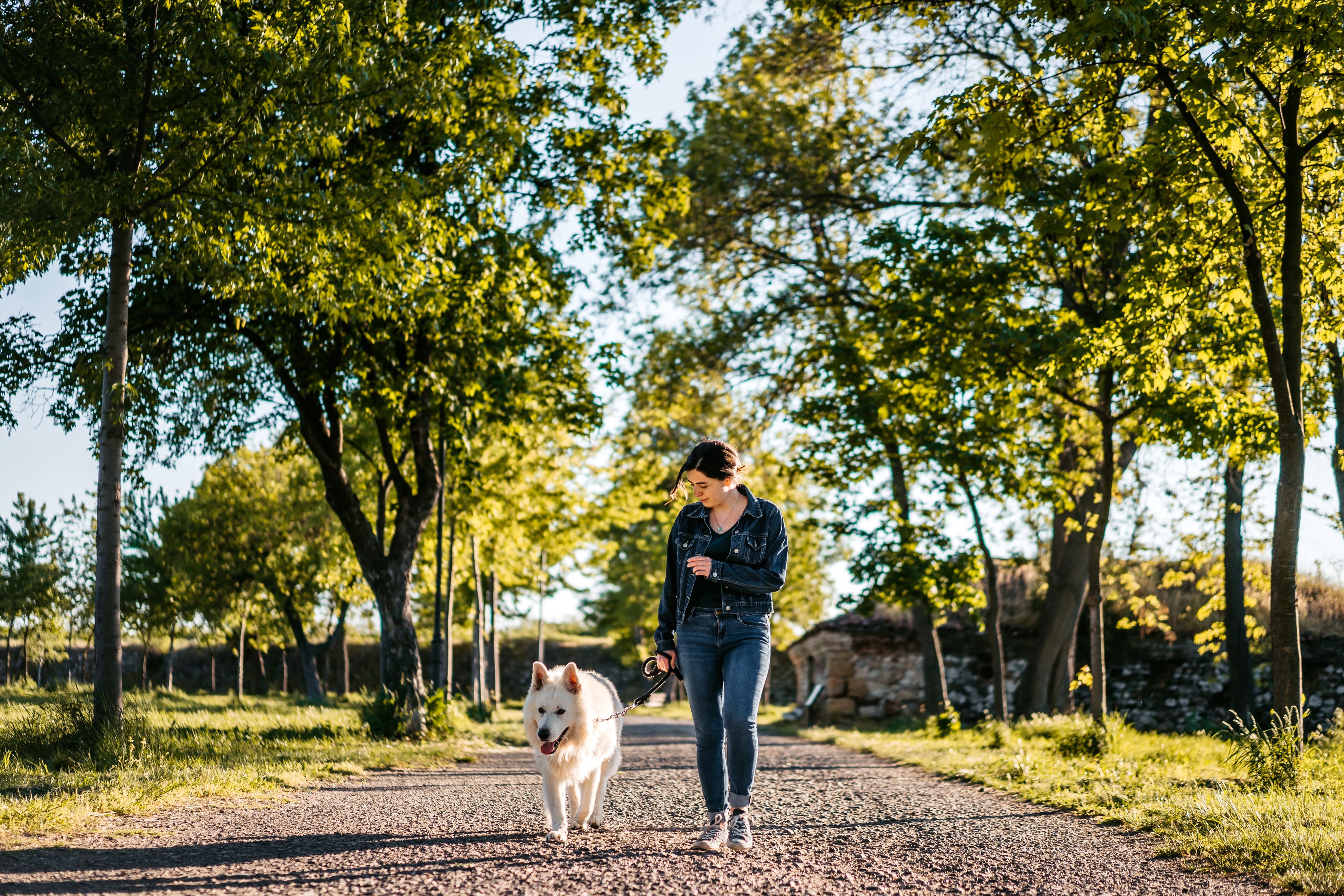
Does My Dog Trust My Dog Sitter?
You meet a dog sitter for the first time. While you are talking, you watch your dog closely. Does he approach the person curiously? Does he prefer to keep his distance? Or does he already seem at ease after just a few minutes?
We often have the feeling that dogs can read people instantly. And there is actually more science behind this impression than one might expect. While we humans rely primarily on words when meeting new people, dogs pay attention to entirely different signals.
They observe our body language, our movements, our voice, and our scent. Studies show that dogs are very sensitive to human emotions and frequently pick up on moods more than we realise.
Someone who is nervous or tense sends out signals. Dogs perceive these and respond accordingly.
It is therefore not uncommon for a dog to trust a calm, composed person more quickly than someone who is making a particular effort to appear likeable.
First impressions form quickly – but are not final
Researchers have found that dogs develop expectations of people after only a short time. When someone behaves calmly, kindly, and predictably, trust often forms quickly. If a person is hectic, loud, or inconsistent, many dogs respond more cautiously.
This does not mean, however, that a dog immediately likes or rejects a person.
As with us humans, genuine trust usually develops over several encounters. The first impression plays a role, but it is rarely the whole story.
Why some dogs take longer
Every dog brings its own personality and past experiences. A puppy that has had many positive encounters with different people will often approach new individuals openly. Other dogs need more time.
Dogs from shelters or animals with negative experiences in particular can sometimes respond more hesitantly. This is not a sign of unfriendliness, but a natural protective mechanism.
It is therefore important never to force a dog into an encounter. Trust cannot be demanded – it develops through positive experiences and patience.
For dogs, trust above all means safety
An interesting insight from behavioural research: for dogs, trust is closely linked to predictability. Dogs want to be able to understand how people will behave. Someone who acts calmly, clearly, and consistently gives a dog a sense of orientation.
For dogs, trust often does not mean: "This person is my best friend." It means rather: "I feel safe with this person."
What makes a good dog sitter
Many people believe that dog care consists mainly of walks and feeding. In reality, good care begins much earlier.
An experienced dog sitter respects the dog's boundaries, does not impose themselves, and gives the dog time to explore the situation at its own pace.
Particularly important qualities are:
Patience
Reliability
Calm
Attentiveness
An understanding of the dog's needs
These qualities help build a trusting relationship – even when the care is initially planned for just a few hours or days.
How to make the first meeting a success
When your dog is being cared for for the first time, there are a few things you can do to make the situation more comfortable for everyone involved:
Arrange a no-obligation introduction before the first care session.
Choose a calm environment without time pressure.
Share your dog's important habits and preferences.
Give your dog the opportunity to make contact on its own terms.
Stay as relaxed as possible – your dog takes its cues from you.
When looking for suitable care, it ultimately comes down to trust – for both person and dog.
That is why at Liesl we rely on personal profiles, transparent information, and the opportunity to meet before a care arrangement begins. This way you can find out whether a dog sitter is truly the right fit for your dog before you commit to a booking.
Because the best care does not begin with the booking – it begins with a good first encounter.